


Sakuramasamune Sake Museum Review: A Modern Craft Showcase in Kobe's Nada District


Sakuramasamune Sake Museum Review: Modern Nada Brewery & Shop
When touring the historic Nada-Gogo brewing district in Kobe—the undisputed sake capital of Japan—most museum facilities follow a familiar pattern: dim lighting, cavernous preserved timber storehouses, and long lines of traditional cedar vats.
While that rustic heritage is fascinating, Sakuramasamune Memorial Hall "Sakuraen" (櫻正宗記念館 櫻宴) takes a noticeably different approach.
Past the traditional outer wooden gates, the complex opens up into an airy, contemporary two-storey building centred around a massive wooden brewing vat and modern leaf-light sculpture. It feels clean, bright, and distinctly modern compared to many neighbouring stops.
I spent around an hour here wandering the upstairs artefact exhibits, browsing a small local art gallery space, and picking up some exceptional bottles in their boutique shop.
Here is my honest review of visiting the Sakuramasamune Sake Museum, what to expect inside, and practical tips for planning your visit.

This site contains affiliate links to products. I may receive a small commission for purchases made through these links, at no extra cost to you.
The Backstory: The Origin of the Name "Masamune"
Founded in 1717, Sakuramasamune holds a legendary place in Japanese brewing history:
The Birth of "Masamune": During the Edo period, the 6th-generation head of the brewery saw the characters for Seishu (refined sake) and adopted the name Masamune (inspired by the famous swordsmith and Buddhist texts). The name became so wildly popular that breweries all across Japan began slapping "Masamune" onto their labels. To set themselves apart, the brewery prefixed "Sakura" (cherry blossom)—Japan’s national flower—creating the iconic Sakuramasamune brand.
Discovery of Kyokai No. 1 Yeast: In 1906, the brewing institute isolated the very first official national brewing yeast (Kyokai No. 1) directly from Sakuramasamune’s fermentation tanks.

What to See: Modern Design & Upstairs History
The layout of Sakuraen is compact, making it an easy, self-guided visit that takes about 30 to 45 minutes to walk through:
The Central Atrium: As soon as you step inside, the ground floor features a light-filled open atrium. Suspended right through the centre is a massive wooden brewing barrel topped with a striking, illuminated petal chandelier that sets the contemporary tone.
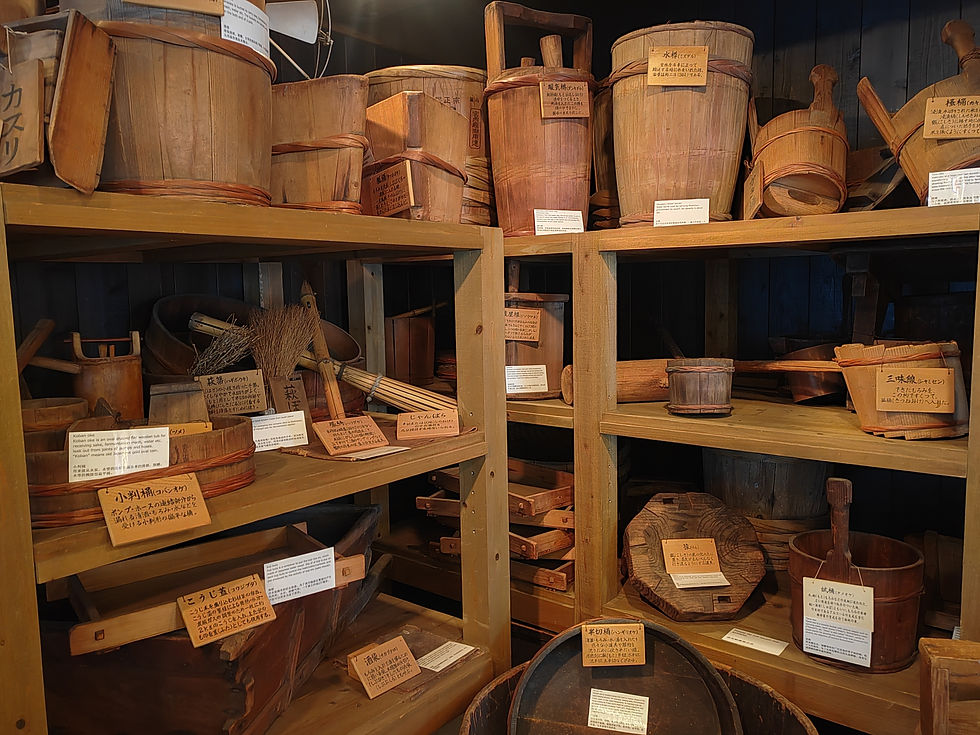
Upstairs Artefact Collection: Taking the timber staircase upstairs leads to a series of curated displays detailing Edo- and Meiji-era production. You will find giant earthenware fermentation jars, stone grain-milling wheels, wooden hand-buckets (oke), mash paddles, and traditional iron steaming kettles, each neatly labelled.
Historic Bottles & Vintage Photos: A glass display cabinet houses antique, hand-blown green glass sake bottles alongside early printed paper labels and archival black-and-white photographs of brewery workers hand-stirring the mash.
The Local Art Gallery Room: Tucked into a side room on the upper level is a quiet gallery space used for rotating exhibitions.
The Local Art Gallery Room
Tucked into a side room on the upper level is a quiet gallery space used for rotating exhibitions.
During my visit in March last year, they were hosting a solo exhibition by artist Mayumi Sun titled "Riz ou Raisin?" ("Rice or Grape?"). The bright orange easel board outside set a welcoming tone, inviting visitors into a sunlit room filled with framed prints and whimsical illustrations.
It was a charming surprise that reinforced how Sakuraen functions as an active community hub and creative showcase, rather than just a commercial tourist stop.

The Bottle Shop: Where You Want to Spend Your Time
While the museum section is relatively quick to walk through, the ground-floor shop is where you will likely linger.
Sakuramasamune produces an impressive range of sakes that can be difficult to track down
outside the Kansai region—including competition-grade Junmai Daiginjo, unpasteurized seasonal brews, and bottles made using local Hyogo-grown Yamada Nishiki rice.
The staff are helpful, and picking up a couple of bottles here was one of the highlights of my tour through Nada.

Practical Info: Getting There & Timing
Address: 4-3-18 Uozaki Minamimachi, Higashinada Ward, Kobe, Hyogo 658-0025, Japan.
Admission: Completely free for the museum exhibits and gallery.
Opening Hours: 10:00 AM – 7:00 PM (Museum and shop). The facility is typically closed on Tuesdays.
Time Needed: Budget roughly 45 minutes to an hour total—around 25–30 minutes to explore the upstairs displays and gallery, plus plenty of time to browse the bottle shop.
Nearest Stations:
Uozaki Station (Hanshin Main Line): Roughly a 5-to-8-minute walk south through quiet residential streets.
Minami-Uozaki Station (Rokko Liner): About a 6-minute walk west.

Final Verdict: Is It Worth It?
If you are doing a walking tour of the Nada sake breweries, Sakuramasamune is a must-visit addition to your route.
Its modern architecture, bright exhibition spaces, and rotating local art displays provide a refreshing contrast to the older warehouse museums nearby, and the retail shop alone makes the detour worthwhile.
Have you explored the sake breweries in Kobe's Nada district or sampled Sakuramasamune? Let me know your favourite Kansai breweries in the comments below!
I hope life is treating you well.
Take care


