


Palais des Beaux-Arts Lille Review: Fine Arts Museum Guide


Palais des Beaux-Arts de Lille Review: A Masterclass in Fine Art Outside Paris
When travellers plan museum itineraries for France, Paris naturally hogs the spotlight. However, just because a city isn't the capital doesn't mean it lacks world-class culture.
Lille is absolute proof of that. Sitting prominently on Place de la République, the Palais des Beaux-Arts de Lille is widely recognized as the second largest general fine arts museum in France, surpassed in collection size only by the Louvre itself.
I visited in August, and I was completely blown away by the sheer quality, curation, and presentation of the space. Everything inside looks immaculate, beautifully preserved, and arranged with exceptional care.
Whether you are an art historian or simply appreciate grand architecture and stunning visual craftsmanship, this museum belongs on any northern France itinerary. Here is my honest review of the experience, what to see inside, and practical tips for visiting.

The Setting: Belle Époque Exterior & Sunlit Sculpture Atriums
Before you even step inside, the building itself makes a massive impression. Completed in the late 19th century in the grand Belle Époque style, the palace commands the entire square with monumental stone arches, towering glass arched windows, and ornamental domes.
Walking through the doors, you enter a soaring ground-floor atrium bathed in natural light.
The Classical Sculpture Hall: Vaulted stone ceilings arch over polished floors lined with classical marble and bronze figures. The spacing between works gives every statue room to breathe, allowing you to walk completely around each piece to admire the anatomical detail and drapery from every angle.
The Atmosphere: Unlike crowded Parisian museums where you're constantly dodging tour groups, the galleries here feel tranquil and dignified.

This post contains affiliate links and display ads. If you book a tour or purchase through these links, I may earn a small commission at no extra cost to you
Exploring the Collections: From Vaulted Crypts to Monumental Canvases
The museum covers a vast range of disciplines across multiple levels. You could easily rush through the highlights, but pacing yourself makes all the difference.
The Brick-Vaulted Medieval & Renaissance Basement
Downstairs, the museum takes advantage of historic exposed brick cross-vaults. This level houses stunning religious sculpture, carved wooden altarpieces, triptychs, and delicate stone reliefs. Modern glass showcases reflect off the atmospheric masonry ceiling, giving the entire lower floor a timeless, contemplative vibe.

European Painting Masters & The Grand Galleries
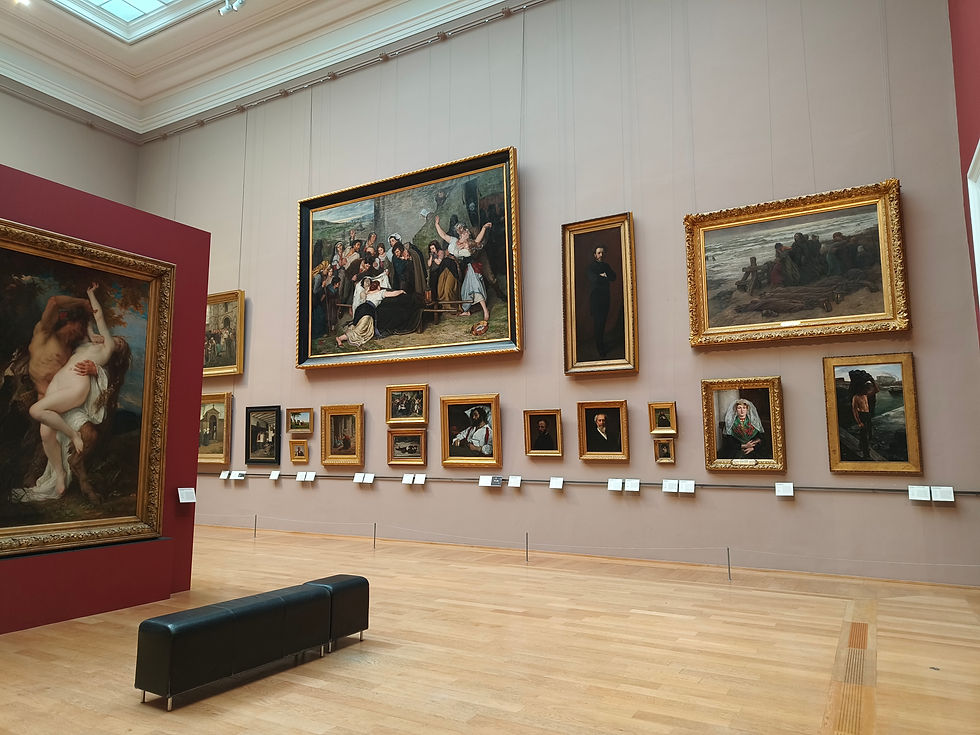
Heading up to the main gallery floors, the space shifts into monumental exhibition halls featuring deep crimson and muted clay walls that make the gilded frames pop:
Flemish & Dutch Masters: Given Lille's geographic proximity to Flanders, the museum holds an astonishing collection of Flemish masters, including massive, dramatic canvases by Peter Paul Rubens and Anthony van Dyck.
French Romanticism & Academic Masters: Walking through the upper wings reveals colossal salon paintings, detailed 19th-century portraits, and dramatic maritime and landscape compositions by artists like Gustave Courbet, Eugène Delacroix, and Jean-Baptiste-Camille Corot.
Visiting Advice: Pace Yourself & Use the Benches
Take your time. The sheer volume of work across painting, sculpture, ceramics, and 18th-century relief maps means gallery fatigue can creep up quickly if you try to take in every label at once.
I spent a solid couple of hours wandering through the rooms, and that felt like a comfortable visit without feeling overwhelmed.
Fortunately, the museum curators did a stellar job with seating. There are sleek leather benches placed generously throughout the central aisles and gallery rooms. You can easily sit down, rest your legs, and simply take in a massive salon canvas or sculpture line from across the room before moving to the next wing.
Practical Info: Tickets, Hours & Getting There
Address: Place de la République, 59000 Lille, France.
Getting There: It is exceptionally easy to reach on foot. From either Gare de Lille Flandres or Gare de Lille Europe, it is an easy 10-to-15-minute walk through the central shopping streets. Alternatively, take Metro Line 1 (Yellow Line) straight to the République – Beaux-Arts station, which exits right onto the museum plaza.
Opening Hours: Monday 2:00 PM – 6:00 PM; Wednesday to Sunday 10:00 AM – 6:00 PM. Closed on Tuesdays.
Admission: Standard adult permanent collection tickets are typically around €7, increasing slightly to around €10 when combined with major temporary exhibitions. Admission is free for all visitors on the first Sunday of every month.

Final Verdict: Is It Worth It?
If you find yourself in Lille, the Palais des Beaux-Arts is an essential stop. The combination of palatial 19th-century architecture, quiet brick-vaulted basements, and an encyclopedic fine art collection rivals the top institutions in Europe while maintaining a relaxed, unhurried atmosphere.
Have you visited the Palais des Beaux-Arts in Lille or explored northern France's regional art museums? Which gallery room was your favourite? Let me know in the comments below!
I hope life is treating you well.
Take care
