


Minase Jingu Shrine Review: A Peaceful, Crowd-Free Detour Near Yamazaki

Minase Jingu Shrine Review: Quiet Osaka Kyoto Border Detour
When planning a day exploring the sights along the railway corridor between Kyoto and Osaka, the big draws are usually the Suntory Yamazaki Whisky Museum and regional historic sites.
During my trip in March, I built a day itinerary that connected several stops in the area: touring Yamazaki, walking the battlements at Shoryuji Castle Park, and heading back into central Kyoto for Kyoto Tower and an evening run to Don Quijote (Donki).
Sitting just a short walk south of Yamazaki in the town of Shimamoto is Minase Jingu (水無瀬神宮).

This site contains affiliate links to products. I may receive a small commission for purchases made through these links, at no extra cost to you.
I didn't have extensive plans before stopping by. It ended up being a brief, low-key visit where most of the interior halls were closed, but it offered a remarkably tranquil, crowd-free atmosphere that contrasted sharply with the crowded shrines in central Kyoto.
Here is my honest review of visiting Minase Jingu, what to look for on site, and practical transit advice for fitting it into your day.
The Backstory: Emperors, Tea Masters & Pure Spring Water
Despite its modest, understated presence today, Minase Jingu has deep historical roots:
Imperial Palace Origins: Built in 1240, the shrine stands on the former site of the Minase Villa, an imperial detached retreat favoured by Emperor Go-Toba in the Kamakura period. Go-Toba composed poetry here along the banks of the Minase River, and the shrine enshrines Emperor Go-Toba alongside Emperor Juntoku and Emperor Tsuchimikado.
Sacred Tea Ceremony Water (Rikyu-no-Mizu): The shrine grounds sit above one of the purest natural groundwater sources in Japan. Its natural well water, known as Rikyu-no-Mizu (Water of Sen no Rikyu), is the only natural spring water in Osaka Prefecture selected among Japan's "100 Exquisite and Well-Conserved Waters." Tea master Sen no Rikyu famously drew water here for his tea ceremonies, and locals still visit with bottles to collect the soft mineral water.

Walking the Grounds: Gravel Courtyards & A Shinto Prayer Guide
Because most of the shrine buildings were closed during my visit, the experience was about taking an unhurried walk through the wooded enclosure:
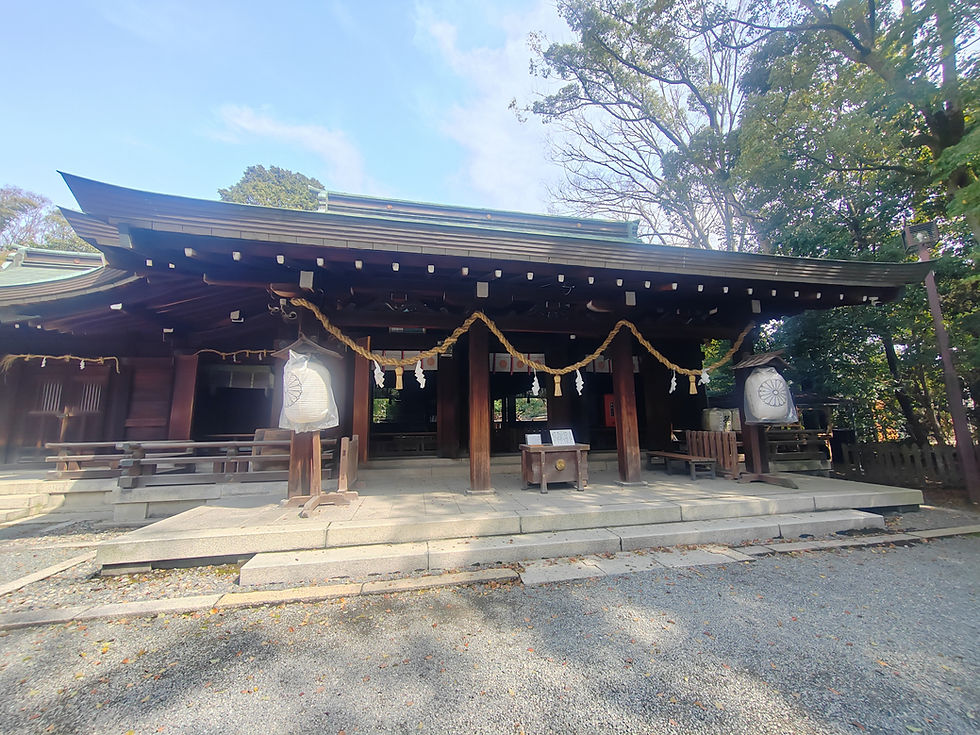
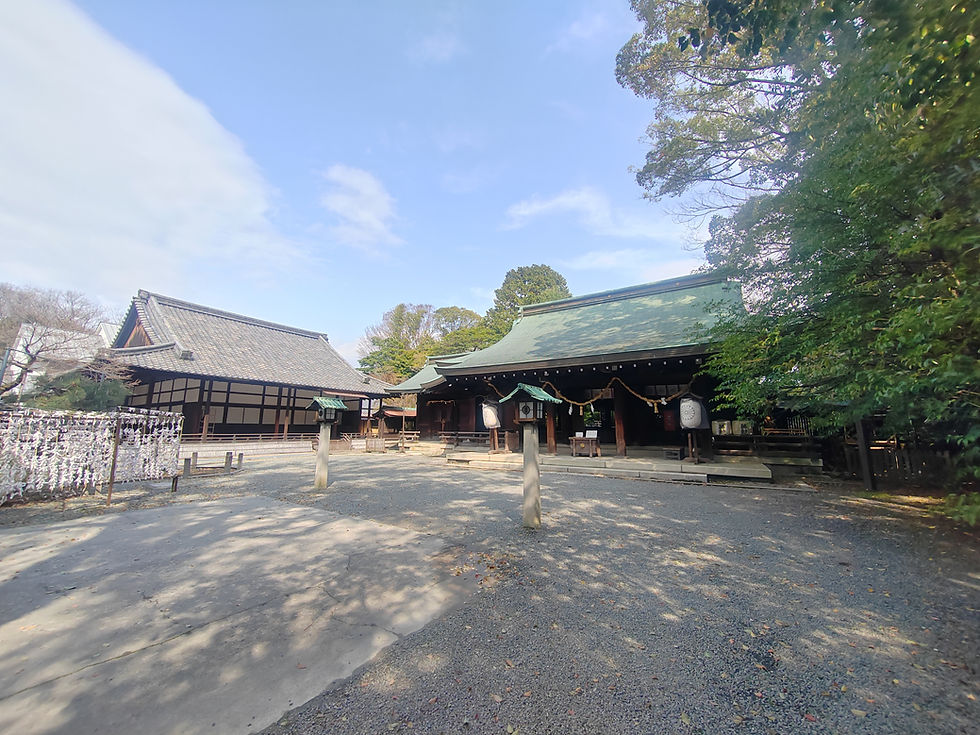
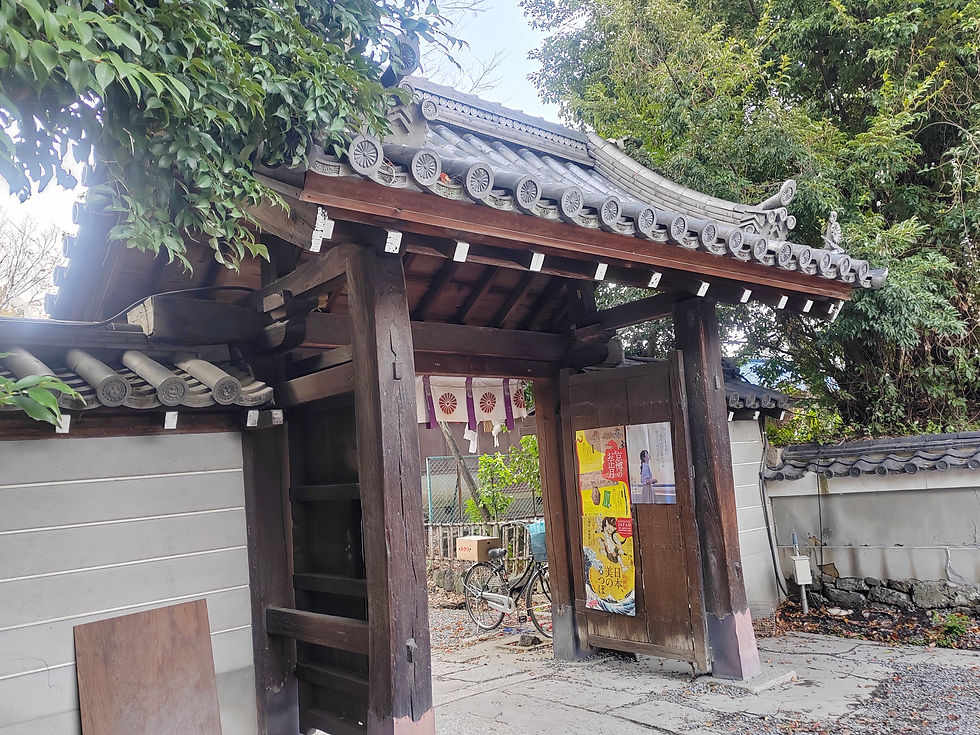
The Timber Gate & Stone Lanterns: You enter through a traditional tiled wooden gate into a gravel courtyard surrounded by mature evergreen trees. The weathered dark wood of the main hall (Haiden), green copper rooflines, heavy straw sacred ropes (shimenawa), and white paper lanterns give it a quiet dignity.
Prayer Etiquette Guide: Standing right by the offering box (saisenbako) in front of the main sanctuary, the shrine provides a clear, illustrated diagram showing foreign and first-time visitors how to pray properly in Shinto tradition (the classic sequence: bow twice to 90 degrees, clap twice at chest height to pray, and finish with one final deep bow). It is a thoughtful touch that makes participating feel approachable.
Wishes & Seasonal Goshuin: Beside the main path stands a tall, bamboo-wrapped sacred tree base surrounded by wooden ema prayer plaques and fortune paper (omikuji). For travellers collecting shrine stamps, a self-service table outside offers unique goshuin craft sheets (¥500), complete with delicate seasonal paper cutouts of butterflies and cherry blossoms that you can paste into your pilgrimage book.

Practical Info: Getting There & Route Pairing
Address: 3-4-1 Hirose, Shimamoto, Mishima District, Osaka 618-0011, Japan.
Admission: Completely free to walk the grounds.
Opening Hours: The grounds are open during daylight hours; the shrine office generally operates from 9:00 AM to 5:00 PM.
Nearest Stations:
Minase Station (Hankyu Kyoto Line): Roughly a 10-to-12-minute walk northeast.
Yamazaki Station (JR Kyoto Line) / Oyamazaki Station (Hankyu Line): Approximately a 15-to-20-minute walk south along local residential roads.
How to Fit It Into Your Day
Minase Jingu does not require hours of exploration—you can easily take in the architecture, pay your respects, and walk the gravel paths in 20 to 30 minutes.
The best way to visit is to combine it with nearby stops:
Pair it with a tour or tasting session at the Suntory Yamazaki Whisky Museum, located just up the road.
Take the train north to explore Shoryuji Castle Park in Nagaokakyo before returning to central Kyoto.
Final Verdict: Is It Worth It?
Minase Jingu is not a sprawling temple complex packed with souvenir stalls, and you should not make a dedicated cross-country journey solely to see it.
However, if you are visiting the Yamazaki distillery, exploring the borders between Osaka and Kyoto, or simply appreciate quiet, contemplative Shinto shrines far away from the tourist swarms, it is a very peaceful and authentic 20-minute stop.
Have you visited Minase Jingu or sampled the famous spring water in Shimamoto? Let me know your travel experiences in the comments below!
I hope life is treating you well.
Take care


