


Kiku-Masamune Sake Museum Review: Traditional Brewing in Kobe Nada

Kiku-Masamune Sake Museum Review: Traditional Brewing in Kobe Nada
When hopping between breweries across Kobe’s famous Nada-Gogo brewing district, you quickly discover that no two museum facilities feel the same.
Some take a completely modern, boutique approach like Sakuramasamune, while others lean entirely into weathered, preserved timber storehouses like Sawanotsuru.
Sitting comfortably between the two styles is the Kiku-Masamune Sake Brewery Museum (菊正宗酒造記念館).
Founded in 1659 by the Kano family, Kiku-Masamune is legendary for its dry, crisp sake (karakuchi) and its steadfast commitment to the authentic, labour-intensive Kimoto brewing method.
While Sawanotsuru remains my personal favourite for pure museum atmosphere, Kiku-Masamune puts on a fantastic exhibition. It is packed with genuine wooden brewing machinery, detailed diorama models, and designated cultural treasures.
Here is my honest review of visiting the Kiku-Masamune Sake Brewery Museum, what to look for inside, and practical tips for fitting it into a Nada brewery walking route.

This site contains affiliate links to products. I may receive a small commission for purchases made through these links, at no extra cost to you.
The Backstory: Kimoto Tradition & Rebuilt Heritage
Kiku-Masamune's museum carries special cultural weight across Japan:
Kimoto Method Masters: While most modern commercial breweries use cultivated lactic acid to speed up fermentation, Kiku-Masamune still brews its authentic lines using the traditional Kimoto method—a slow, four-week process where brewery workers mash rice and koji by hand with wooden poles to naturally foster lactic acid bacteria.
Important Tangible Folk Cultural Properties: The original museum was constructed from a preserved Edo-period storehouse, but it was completely leveled during the Great Hanshin Earthquake in 1995. Remarkably, many of the historic tools were salvaged from the rubble, and the museum was rebuilt using authentic timber and architectural techniques. Today, their brewing equipment collection is officially designated by the Japanese government as an Important Tangible Folk Cultural Property.

What to See: Giant Wooden Vats, Press Beams & Historic Ceramics
The self-guided tour follows a well-marked one-way route that takes roughly 45 minutes to an hour to explore at a relaxed pace:
The Architectural Brewery Model: Right at the entrance sits a large glass-encased wooden diorama showing the intricate timber post-and-beam construction of a traditional Edo-era brewing house (Honkanzo), illustrating how workers moved ingredients across the complex.
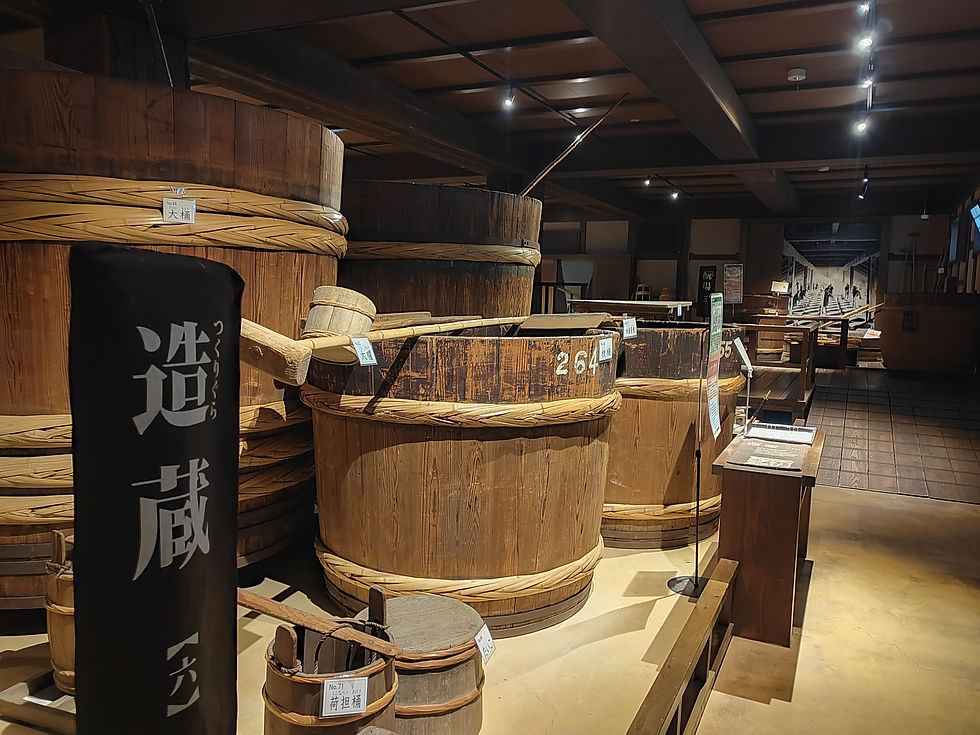
The Authentic Brewing Floor: Step inside the main exhibition hall and you are immediately surrounded by massive cedar vats (Oke), malt coolers, and fermentation tanks. Standout exhibits include the colossal wooden lever-press beam (Kakariba) weighted down with river stones, used to press fermented mash and separate clear sake from the solid lees.
Step-by-Step Illustrated Scrolls: Large painted hand-scrolls line the walls above archival display cases, illustrating every stage of the seasonal brewing cycle from washing local Yamada Nishiki rice to steaming and barrel-binding.
The Ceramic & Porcelain Sake Cup Display: Inside the upper gallery and archive cases, you will find an exquisite collection of antique sake drinking vessels (sakazuki and ochoko). The tiered glass shelves display dozens of delicate porcelain cups featuring hand-painted blue-and-white motifs, gilded rims, crackle glazes, and iron-red lacquer.

The Shop & Tasting Counter
After completing the exhibition loop, the route brings you directly into the tasting and retail space.
The shop offers a wide selection of Kiku-Masamune sakes to purchase, ranging from freshly pressed seasonal batches and dry Kimoto Junmai Daiginjo to brewery-exclusive bottles, cedar cask-aged sake (Taru sake), and sake-based skincare goods.
While tasting pours are available at the counter, I had to skip the samples to stay on track for the next brewery stop on my day itinerary. If you have extra time, it is well worth lingering for a pour.

Practical Info: Getting There & Visiting Details
Address: 1-8-1 Uozaki Nishimachi, Higashinada Ward, Kobe, Hyogo 658-0026, Japan.
Admission: Completely free.
Opening Hours: 9:30 AM – 4:30 PM (entry until 4:00 PM). Closed over the New Year holiday period.
Time Needed: Budget roughly 45 minutes to an hour to read the displays, examine the tools, and browse the bottle shop.
Nearest Stations:
Minami-Uozaki Station (Rokko Liner): Approximately a 2-minute walk north across the canal bridge.
Uozaki Station (Hanshin Main Line): Roughly a 10-minute walk south through the brewing district.

Fitting It Into a Nada Brewery Walk
Because the breweries in Uozaki are clustered together, pairing them is straightforward:
Start at Sawanotsuru to experience traditional preserved storehouse architecture.
Walk east along the district lanes to explore the folk brewing machinery and ceramic cups at Kiku-Masamune.
Continue northeast to Sakuramasamune for modern architectural contrast, local art, and bottle shopping.

Final Verdict: Is It Worth It?
If you are putting together a sake tour through Nada, Kiku-Masamune belongs near the top of your list.
It provides an informative, hands-on visual education on how sake was traditionally crafted before modern automation took over, balanced with beautiful ceramic displays and a well-stocked shop.
Have you visited the Kiku-Masamune Sake Brewery Museum or tasted traditional Kimoto-style sake? What were your impressions? Let me know in the comments below!
I hope life is treating you well.
Take care


