


Kabukiza Theatre Tokyo Review: Single Act Tickets & Ginza Night


Kabukiza Theatre Tokyo Review: Seeing World-Class Kabuki on a Single-Act Ticket
Tokyo is a city that never stops, looking completely magnetic whether you explore it under the morning sun or beneath blinding neon signs.
During my trip in late March and early April, I spent most of my daylight hours packing in temple visits, garden walks, and museum galleries across the city. By late afternoon, fatigue usually set in, meaning I hadn't spent nearly enough time simply wandering through the city at night to take in the evening scenery.
One night, I finally slowed down. I took a scenic evening stroll along the waterfront near the Sumida River, watching the illuminated arches of Kachidoki Bridge reflect across the water and the city skyline glow in the dark.
From there, I headed into the heart of Ginza to the grand Kabukiza Theatre (歌舞伎座) to experience one of Japan's most historic performing arts.
I managed to secure a single-act ticket (Makumi-seki) for an evening performance. It was a phenomenal experience, full of wit, colour, and dramatic stagecraft.
Here is my honest review of seeing Kabuki at Kabukiza, how the single-act ticketing works, and a few essential etiquette rules so you don't embarrass yourself in the auditorium.

This site contains affiliate links to products. I may receive a small commission for purchases made through these links, at no extra cost to you.
Why Single-Act Tickets (Makumi-seki) Are the Best Option
If you look into seeing a standard Kabuki performance, the logistics can be intimidating. Full programs often run for four to five hours across multiple acts, and prime floor seats easily cost upwards of ¥15,000 to ¥20,000.
For travellers who want to experience the artistry without committing their entire day or draining their travel budget, Single-Act Seats (一幕見席 / Makumi-seki) are the perfect solution:
Affordable & Low Commitment: Instead of sitting through an entire marathon production, a single-act ticket lets you watch just one specific dance or drama (usually lasting anywhere from 30 to 70 minutes) from the 4th-floor gallery.
Budget-Friendly: Depending on the specific play and its duration, single-act seats generally cost between ¥1,000 and ¥3,000, making authentic classical theatre accessible to casual visitors.
Easy Online or Same-Day Booking: You can reserve seats online via the official ticket portal starting at noon the day before the performance, or queue at the dedicated 4th-floor single-act ticket window on the day.

The Performance: Vibrant Characters, Live Energy & The Language Barrier
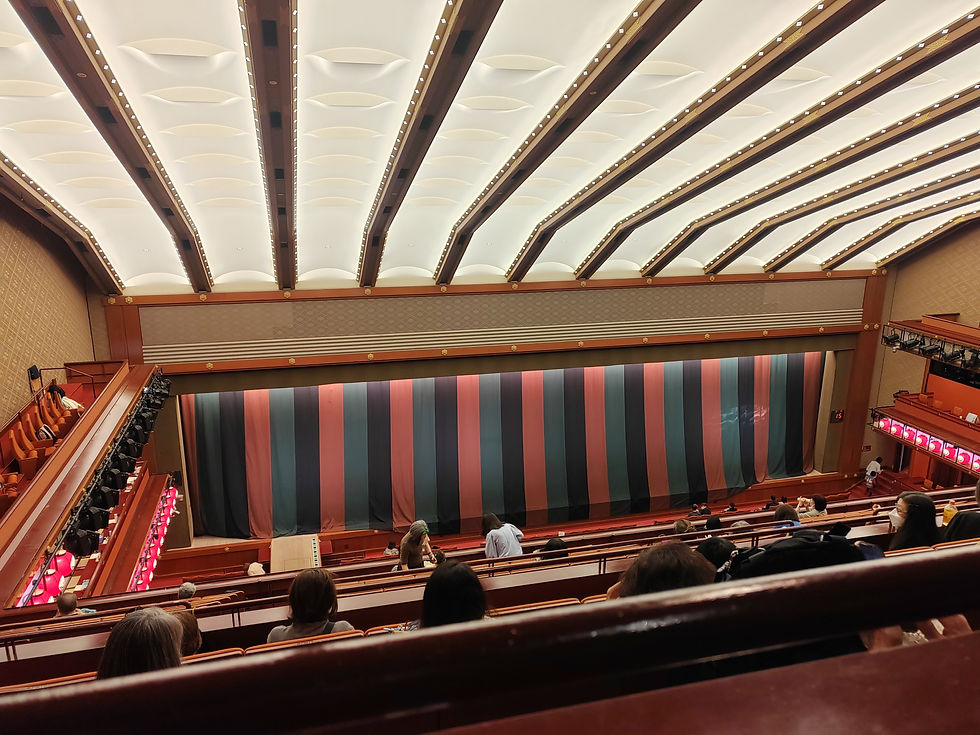
The interior of Kabukiza is magnificent. Even up in the 4th-floor gallery, the perspective over the traditional striped joshikimaku stage curtain, the dynamic wooden stage, and the hanamichi (the runway entering through the audience) is commanding.
Because I understand some Japanese, I had an absolute blast. Traditional Kabuki isn't stiff or dry; many of the classic plays are comedies packed with physical humour, clever wordplay, exaggerated mannerisms, and audience banter. Being able to follow along and laugh out loud with the rest of the crowd was pure joy.
What If You Don't Speak Japanese?
Do not let the language barrier scare you away:
English Caption Guides: The theatre offers portable English subtitle tablets for single-act audiences (available for a rental fee, usually around ¥1,000 cash).
Real-Time Context: These screens provide synchronised commentary, explaining character relationships, classical metaphors, and plot twists as they happen on stage.
Visual Storytelling: Even without reading every line, the elaborate costumes, iconic white-and-red kumadori makeup, and thunderous wooden clappers (ki) tell a universal, highly visual story.
A Quick Rant: Theatre Etiquette
Kabuki is a living cultural tradition with deep historical roots, and while it is lively, it is still formal live theatre.
Unfortunately, you often see tourists who treat the auditorium like a casual train carriage:
Leave the Shopping Bags Behind: Do not walk into the auditorium weighed down with 50 giant duty-free carrier bags from Ginza shopping sprees. Space in the upper tiers is tight. Drop your heavy luggage and shopping haul into station lockers or hotel rooms before arriving.
Silence Means Silence: Do not whisper, point, chat with your travel companion, or rattle snack wrappers while the actors are delivering lines. The acoustic design of Kabukiza carries every single sound directly down to the stage.
No Phone Screens or Cameras: Photography and video recording during the performance are strictly prohibited. Put your phone on silent and keep it tucked away in your pocket until the curtain drops.

Be respectful, don't make an unnecessary fuss, and allow everyone around you to immerse themselves in the performance.
Practical Info: Getting There & Visiting Details
Address: 4-12-15 Ginza, Chuo City, Tokyo 104-0061, Japan.
Nearest Station: Higashi-Ginza Station (Tokyo Metro Hibiya Line and Toei Asakusa Line) connects directly to the basement level (Kobikicho Square) of the theatre via Exit 3. It is also an easy 5-minute walk from Ginza Station.
Single-Act Access: The 4th-floor single-act seats have their own separate entrance on the far left side of the main facade with dedicated elevators running straight to the upper tier.
Evening Walk Pairing: If you have time before or after your evening act, take a 10-to-15-minute walk south toward the Sumida River waterfront to view the illuminated arches of Kachidoki Bridge and Tsukiji-Ohashi under the night sky.
Final Verdict: Is It Worth It?
If you appreciate drama, performance art, or simply want to experience a quintessential Japanese theatrical tradition, seeing a show at Kabukiza is a million percent worth it.
Grabbing a single-act ticket takes the stress and high cost out of the process, fits effortlessly into an evening schedule, and delivers an unforgettable cultural spectacle right in the heart of Tokyo.

Have you caught a Kabuki show at Kabukiza, or watched classical performing arts in Japan? What act did you see? Let me know your thoughts in the comments below!
I hope life is treating you well.
Take care


